
17 May 2026
Why Public EV Charging Still Feels Like Dial-Up Internet
Public EV charging is improving, but broken chargers, app friction, payment failures, and weak first-try success still make it feel too fragile.
8 min read
“Charge at home. It’s easy.”
That is still the default EV charging advice. But what about when it is not easy?
That advice assumes the driver has a garage, a driveway, or a standalone house where a charger can be installed with one decision and one electrician.
That works for many early EV owners. It does not work for everyone else.
If you live in an apartment, rent your home, park in a shared basement, use a body corporate car park, or rely on an allocated bay with no power nearby, EV charging is not just a product choice. It is a property decision.
Who approves the charger? Who owns the wiring? Who pays for the power? What if 20 residents want chargers later? Does the building have enough electrical capacity? Can a tenant ask for the same thing an owner can? What happens if the body corporate says no?
That is the apartment EV crisis. Not a sudden collapse, but a slow split between people who can charge where they live and people who have to negotiate, queue, or pay public-charging prices because their building was not ready.
The EV transition can become a class divide if convenient charging belongs mainly to people with private parking and control over their own property.
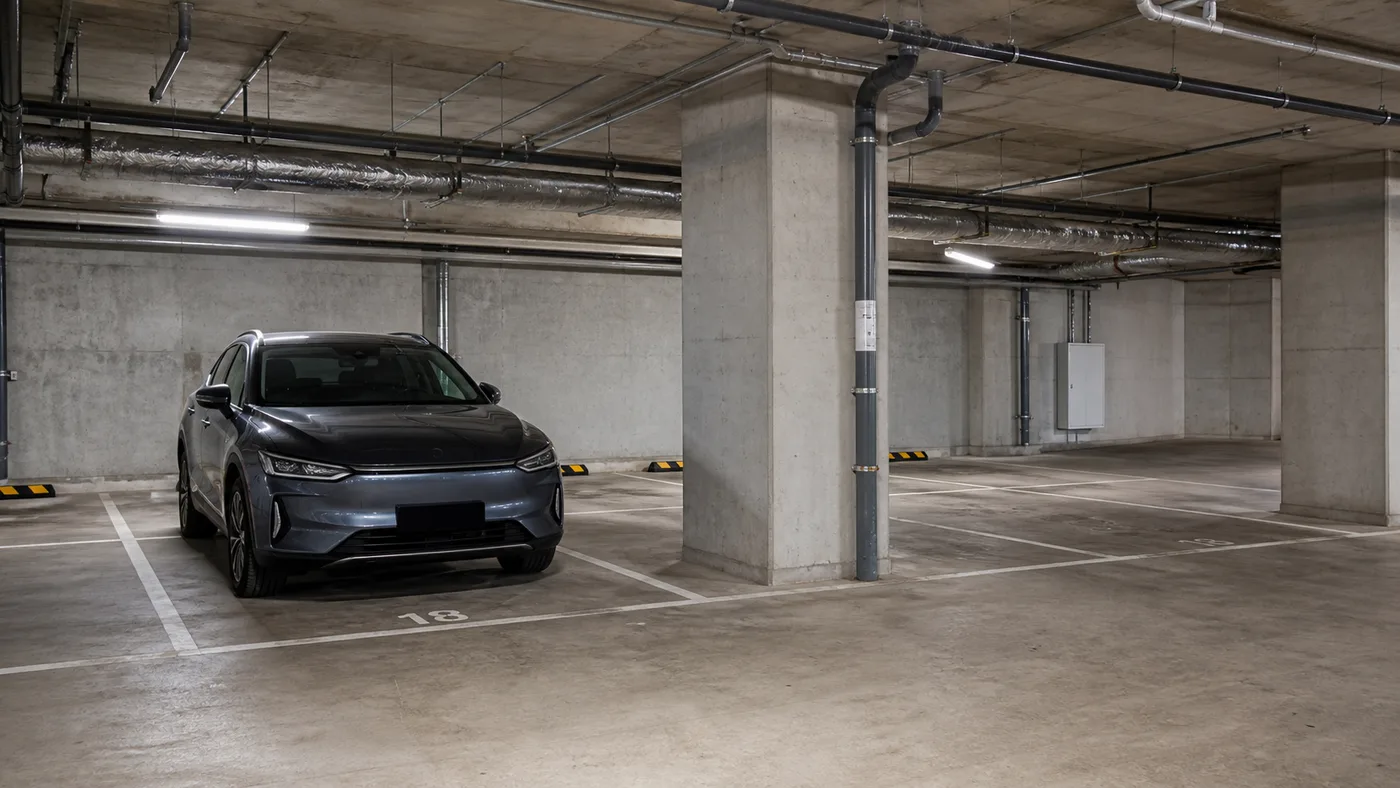
New Zealand’s charging story still depends heavily on home charging.
EECA’s 2025 EV charging research says home charging is the most common way New Zealand EV drivers charge. It also says public charging remains part of the mix for nearly half of EV and PHEV drivers, and one in five BEV and PHEV drivers are entirely reliant on the public charging network. Those public-only drivers are more likely to be younger, Auckland-based, and renters.
That should change how we talk about charging access.
A homeowner with a driveway can often treat charging as a private upgrade. An apartment resident usually cannot. A renter may need landlord consent. A body corporate may need a vote. A building manager may worry about fire risk, insurance, common-property wiring, billing, and future demand. An electrician may say one charger is easy but 40 chargers are a different design problem.
New Zealand policy already recognises the gap. EECA says the National EV Charging Strategy aims to improve equity of access to home charging and will look at renters, homes with little or no off-street parking, multi-unit dwellings, and social housing.
That is not a niche list. It is a warning about where adoption gets harder.
Australia is dealing with the same issue more visibly through strata guidance, EV-ready building programmes, and grants for apartment buildings. The Australian Government has published guides for EV charging in strata buildings. NSW has a specific EV Ready Buildings grant for residential strata apartment buildings. Western Australia points to National Construction Code changes that make new buildings easier to equip for EV charging infrastructure.
Look further afield to the United States and the direction becomes harder to ignore. California law says rules that effectively prohibit or unreasonably restrict EV charger installation in an owner’s unit or designated parking space are void and unenforceable. Other states and jurisdictions have moved in the same direction. New York, Colorado, Illinois, Maryland, Virginia, the District of Columbia, and Maine all have versions of rules that limit how far building owners, condominium associations, or residential associations can go in blocking chargers. They still allow reasonable conditions around safety, approvals, insurance, installation standards, and who pays. But the basic direction is clear: apartment charging is becoming a managed right, not a favour.
That does not mean New Zealand should copy U.S. strata law word for word. It does mean the pressure is predictable. Once EV ownership moves beyond detached homes, charging access stops being a private amenity question and becomes a housing-infrastructure question. New Zealand is unlikely to avoid the same debate.
The direction is clear: apartments are not an edge case anymore. They are one of the places where EV charging will either become fair and practical, or become a reason people delay buying an EV.
The evidence points to three connected problems: access, governance, and electrical capacity.
The reasonable inference is not that apartments cannot support EVs. They can.
The problem is that apartment charging has to be designed as shared infrastructure, not as a private driveway charger copied into a basement.
| Driveway charging assumes | Apartment charging has to answer | | --- | --- | | The driver controls the parking space | A landlord, body corporate, or owners corporation may control approval | | One charger affects one household | One decision can affect common property and future residents | | The owner pays their own power bill | Shared circuits need billing, reimbursement, or metering rules | | Spare capacity is a household question | Capacity is a whole-building and switchboard question | | The install is a one-off job | The first install can set the pattern for every later request | | Charging access is private convenience | Charging access becomes building policy |
This is why apartments turn EV charging into politics. Not party politics. Site politics.
A resident may see a simple request: let me charge my car. The committee sees a precedent, a liability question, a billing model, and a future capacity problem. Both sides can be acting reasonably and still end up stuck.
EVs are often described as a technology transition. For apartment residents and renters, they can also become a housing transition.
If you own a standalone house with off-street parking, you may be able to charge cheaply overnight, use off-peak electricity, and wake up with a full battery. Your charging experience becomes boring in the best possible way.
If you rent an apartment with no charger, the same car can feel very different. You may need to use public chargers, pay higher rates, plan around wait times, walk back from a charging site, or ask a property owner to approve a change that mostly benefits you.
That is the divide.
It is not simply EV owners versus non-EV owners. It is people with property control versus people without it. People with private parking versus people in shared parking. People who can turn charging into a home habit versus people who must turn it into an errand.
The risk is that EV convenience becomes another benefit attached to home ownership.
That would be bad policy and bad infrastructure. The point of EV charging should not be to reward the people whose homes already make it easy. It should be to make ordinary charging practical across the places people actually live.
Apartment charging usually fails when everyone tries to solve it one resident at a time.
A better approach is building-level planning.
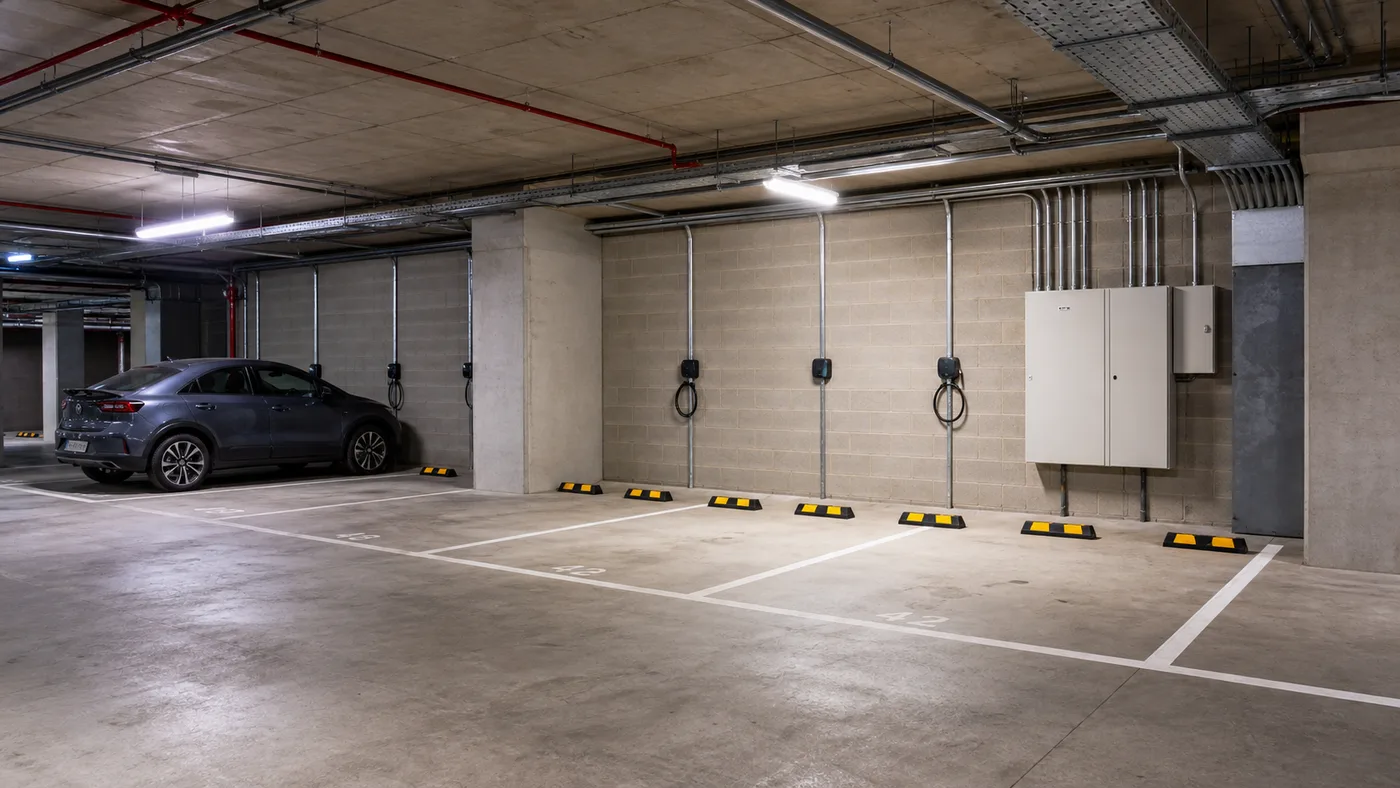
That usually means:
There is no single perfect model.
A shared charger in a visitor bay can be a good early step, but it may create booking fights once more residents buy EVs. A private 32 amp AC charger in one owner’s bay can be convenient, but it may be unfair or impossible to repeat for everyone. A whole-building backbone is cleaner long term, but can be expensive and hard to approve. Public charging can fill gaps, but it does not replace the convenience of charging where the car sleeps.
The right answer depends on the building. The wrong answer is pretending each resident can solve the problem alone.
WattSpot is built around a simple idea: everyday charging should happen where cars already sit for hours.
That matters in apartment and shared-parking sites because the real barrier is often not whether residents want EV charging. It is whether the building can roll out enough usable charging without a huge electrical project, an unclear billing model, or an argument every time a new resident asks to plug in.
WattSpot fits this problem as a coverage-first, long-dwell charging model for shared sites.
The product story is not that every apartment bay needs the fastest possible charger. Many cars sit overnight or through a workday. In those settings, broad access, fair cost recovery, simple session start, and operator visibility can be more important than peak charging speed.
For a body corporate or shared-site operator, the useful question is not only “how fast is one charger?” It is:
That is where WattSpot’s philosophy matters. Apartment charging should not be a luxury for the resident with the loudest voice, the newest building, or the most cooperative landlord. It should become practical shared infrastructure.
The apartment EV crisis is avoidable. But only if charging is planned for the buildings people actually live in, not just the driveways early adopters already have.
Explore the WattSpot charger range or get in touch to discuss your site.
Public EV charging is improving, but broken chargers, app friction, payment failures, and weak first-try success still make it feel too fragile.
8 min read
Public chargers matter, but the bigger EV infrastructure gap is charging access where people already park.
7 min read